
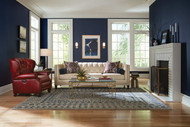
Small Living Room Furniture Ideas That Don’t Feel “Small”
23rd Jun 2026
A small living room does not have to feel cramped, under-furnished, or limited. The right furniture can make a compact room feel comfortable, polished, and useful without making it feel like every piece was chosen just because it was small.
The goal is not to shrink everything. The goal is to choose furniture with the right scale, shape, function, and visual weight.
A small living room can still have a beautiful sofa, comfortable chairs, useful tables, storage, lighting, and a finished look. The key is choosing pieces that fit the room while keeping the space open, balanced, and easy to live in.
Here is how to furnish a small living room so it feels intentional, not undersized.
Start with the right size sofa
In a small living room, the sofa matters most. It is usually the largest piece in the room, so the size, depth, arm style, and base design all affect how spacious the room feels.
A small room does not always need a tiny sofa. In fact, one well-scaled sofa often looks better than several small pieces scattered around the room.
Look for:
- Apartment-size sofas
- Sofas with slim arms
- Sofas with exposed legs
- Sofas with moderate depth
- Sofas without bulky rolled arms
- Sofas without oversized backs
- Sofas that fit the wall without filling the entire room
A sofa can feel too large even if it technically fits. If it blocks the walkway, crowds the coffee table, or makes every other piece feel squeezed, it is too much for the room.
Choose slim arms to gain real seating space
Arm width matters in a small living room.
A sofa with wide arms may take up the same overall length as a sofa with slim arms, but it gives you less usable seating. In a compact room, that difference matters.
For example, two sofas may both be 82 inches long. One has wide rolled arms, while the other has narrow track arms. The slimmer-arm sofa may give you several more inches of actual sitting space without needing a larger footprint.
Good arm styles for small spaces:
- Track arms
- Narrow slope arms
- Slim rolled arms
- Low arms
- Clean transitional arms
Be careful with:
- Oversized rolled arms
- Wide pillow arms
- Heavy flared arms
- Very tall arms that visually close in the room
Slim arms help the sofa feel cleaner and make the seating more efficient.
Use exposed legs to lighten the room
Furniture that sits directly on the floor can make a small living room feel heavier. Pieces with exposed legs show more floor underneath, which helps the room feel more open.
Look for exposed legs on:
- Sofas
- Accent chairs
- Ottomans
- Coffee tables
- Media consoles
- End tables
Exposed legs do not have to mean modern. They can work with traditional, transitional, mid-century, farmhouse, and casual styles. The important part is that the furniture does not feel like one solid block sitting on the floor.
Seeing more floor makes the room feel larger.
Avoid overfilling the room with too many pieces
A small living room often feels crowded because there are too many furniture pieces, not because every piece is too large.
Instead of trying to fit a sofa, loveseat, two chairs, coffee table, two end tables, ottoman, console, and storage cabinet, decide what the room truly needs.
Start with the essentials:
- Sofa or loveseat
- Coffee table or ottoman
- One or two side tables
- One accent chair if space allows
- Media console if needed
- Lighting
Then add only what the room can comfortably handle.
A small room should still have breathing room. Empty space is not wasted space. It is what makes the furniture feel intentional.
Consider one larger piece instead of several small ones
This may sound backwards, but one properly scaled larger piece can make a small living room feel calmer than several tiny pieces.
For example:
- One apartment-size sofa may look better than a small loveseat plus two cramped chairs.
- One storage ottoman may work better than a coffee table plus several baskets.
- One larger media console may look cleaner than multiple small storage pieces.
- One well-scaled accent chair may feel better than two chairs that block traffic.
Too many small pieces can make a room feel busy. A few right-sized pieces often feel more polished.
Choose chairs with lighter visual weight
Accent chairs can work beautifully in small living rooms, but they need the right scale.
Look for chairs with:
- Open arms
- Exposed legs
- Smaller frames
- Lower backs
- Swivel bases if useful
- Narrower profiles
- Simple shapes
Good chair options for small living rooms:
- Small swivel chair
- Open wood frame chair
- Compact club chair
- Slipper chair
- Small barrel chair
- Chair with slim arms
- Accent chair with legs
Be careful with oversized recliners, deep lounge chairs, or very wide club chairs unless the room is truly built around that chair.
A chair should add comfort and function without blocking the path through the room.
Swivel chairs can make a small room more flexible
A swivel chair can be especially useful in a small living room because one chair can serve more than one purpose.
It can turn toward:
- The sofa for conversation
- The TV for watching
- A fireplace
- A window
- An open kitchen or dining area
This is helpful when the room does not have space for multiple chairs facing different directions.
Choose a compact swivel chair if the room has more than one focal point. Just make sure the chair has enough space to turn without hitting the wall, sofa, table, or other furniture.
Use round or oval coffee tables
A rectangular coffee table can work in a small living room, but round and oval shapes are often easier to live with.
Round and oval tables help:
- Soften tight layouts
- Reduce sharp corners
- Improve traffic flow
- Make it easier to move around the sofa
- Work better with sectionals or angled chairs
A round coffee table is especially useful if people walk through the living room often. An oval table gives you more surface area while still keeping softer corners.
If the room is very tight, consider:
- Small round coffee table
- Nesting tables
- Ottoman with tray
- Pair of small stools
- C tables
- Small drink tables instead of a large center table
The table should be useful without becoming an obstacle.
Keep coffee table spacing comfortable
A coffee table should be close enough to reach, but not so close that it crowds the sofa.
A good starting point is about 14 to 18 inches between the sofa and coffee table. In a small room, this spacing helps keep the table usable while still allowing room for knees and movement.
If you cannot leave enough space, the coffee table may be too large or the sofa may be too deep.
In very small rooms, a coffee table is not always required. A small side table, C table, or storage ottoman may work better.
Pick furniture that does more than one job
Small living rooms benefit from furniture that works harder.
Good multifunction pieces include:
- Storage ottoman
- Lift-top coffee table
- Nesting tables
- End tables with drawers
- Media console with closed storage
- Bench with storage
- Sofa table with baskets
- Sleeper sofa
- Small sectional with storage chaise
- Ottoman that can work as seating, table, and footrest
The key is choosing multifunction furniture that still looks good. A storage piece should not feel purely practical. It should support the style of the room while solving a real problem.
Use storage to reduce visual clutter
Clutter makes a small living room feel smaller. The room may not need less furniture. It may need better storage.
Think about what collects in the room:
- Remotes
- Blankets
- Games
- Toys
- Pet items
- Chargers
- Books
- Magazines
- Shoes
- Seasonal items
Then choose furniture that gives those items a place to go.
Good storage choices:
- Closed media console
- Storage ottoman
- End table with drawer
- Coffee table with shelf
- Decorative baskets
- Bookcase with doors
- Console table with storage
- Small cabinet instead of open shelving
Open shelves can look beautiful, but in a small room, too much visible storage can look busy. Closed storage often creates a calmer look.
Choose the right rug size
A small rug can make a small living room feel even smaller. When the rug is too small, the furniture looks disconnected and the seating area feels unfinished.
A living room rug should usually connect the main furniture pieces.
Good options:
- Front legs of the sofa and chair on the rug
- All legs on the rug if the room allows
- Rug large enough to extend beyond the coffee table
- Rug that visually anchors the full seating area
Avoid a rug that only sits under the coffee table. That can make the furniture feel like it is floating around the edges.
In many small living rooms, an 8 x 10 rug may look better than a 5 x 8 if the furniture arrangement allows it. The right size depends on the room, but the goal is connection.
Keep the color palette connected
A small living room often feels larger when the colors are connected instead of chopped up.
That does not mean everything has to be beige or white. It means the main pieces should relate to each other.
Try a simple palette:
- One main neutral
- One supporting neutral
- One accent color
- One wood tone or metal finish repeated throughout
Examples:
- Cream sofa, warm wood tables, taupe rug, muted blue pillows
- Gray sofa, black metal accents, soft ivory rug, walnut media console
- Oatmeal sofa, natural oak, sage green accents, warm white walls
- Leather chair, neutral sofa, patterned rug, black lamps
Too many unrelated colors can make a small room feel visually cluttered. A connected palette helps the room feel calmer and larger.
Use contrast carefully
A small living room does not need to be all light colors. Dark pieces can work beautifully when used with balance.
For example:
- A charcoal sofa can look polished with light walls and a lighter rug.
- A dark wood coffee table can ground a room with a cream sofa.
- A black metal lamp can add structure without taking up much space.
- A leather chair can add warmth and depth.
The mistake is using too many heavy dark pieces together in a compact room. A dark sofa, dark rug, dark tables, dark media console, and heavy drapes may make the room feel smaller.
Use contrast to define the room, but keep the overall balance light enough to breathe.
Choose a sofa color that does not overwhelm the room
In a small room, the sofa color has a major impact.
Good sofa colors for small living rooms often include:
- Cream
- Oatmeal
- Warm gray
- Greige
- Taupe
- Mushroom
- Soft blue-gray
- Light brown
- Textured neutral
- Medium-tone performance fabric
Very light upholstery can make the room feel open, but it needs to fit your lifestyle. If you have kids, pets, or heavy use, a textured mid-tone fabric may be more practical.
A small room does not require a light sofa, but it does require balance. If the sofa is dark, use lighter pillows, rug, tables, and wall color to keep the room from feeling heavy.
Use vertical space
Small rooms often have limited floor space, so use the walls wisely.
Good vertical ideas:
- Wall-mounted shelves
- Tall bookcase
- Floor lamp
- Art above sofa
- Drapery hung higher
- Tall narrow cabinet
- Mirror above console
- Sconces instead of table lamps
Drawing the eye upward makes the room feel more complete. It also keeps the floor from carrying all the visual weight.
Just be careful not to fill every wall. A small room still needs open wall space to feel calm.
Choose lighting that does not take up too much floor space
Lighting is important in a small living room, but bulky lamps can crowd the room.
Good small-space lighting options:
- Slim floor lamps
- Wall sconces
- Table lamps on narrow end tables
- Swing-arm sconces
- Picture lights
- Lamps on a console behind the sofa
- Small accent lamps on shelves or cabinets
A room with only overhead lighting can feel flat. Layered lighting makes the room feel warmer and more finished.
If floor space is tight, wall-mounted lighting can free up table space.
Use mirrors with purpose
Mirrors can help a small living room feel brighter and more open, but placement matters.
Good mirror locations:
- Across from a window
- Above a console table
- Over a fireplace
- On a wall that reflects light
- Near an entry to open up the view
Avoid placing a mirror where it reflects clutter, a blank wall, or an awkward corner. A mirror should reflect something that helps the room feel better.
Pick window treatments that feel light
Heavy window treatments can make a small living room feel closed in. That does not mean you cannot use drapery. It means the treatment should fit the room.
Good options:
- Woven shades
- Roman shades
- Light-filtering shades
- Drapery hung high and wide
- Simple panels in a soft neutral
- Layered shade and drapery if the room allows
Hanging drapery higher and wider than the window can make the room feel taller and more finished. Just avoid bulky fabric that crowds the wall or blocks natural light.
Consider custom-size furniture
Small rooms often have specific challenges: a short wall, narrow doorway, odd corner, radiator, fireplace, or window placement. Standard furniture sizes do not always solve those problems.
Custom or customizable furniture can help with:
- Shorter sofa lengths
- Slimmer arms
- Different depths
- Sectional configurations
- Smaller-scale chairs
- Fabric choices
- Leather choices
- Cushion comfort
- Leg finish
- Arm style
- Ottoman size
A small room may not need less comfort. It may need furniture with better proportions.
A custom sofa with slim arms and the right depth can be more useful than a standard sofa that is too deep, too wide, or too bulky.
Small sectional or sofa and chair?
Both can work. The right choice depends on the room.
Choose a small sectional if:
- The room is mainly for TV and lounging
- You want maximum seating in one corner
- The chaise does not block traffic
- The sectional fits the room’s shape
- You do not need much layout flexibility
Choose a sofa and chair if:
- You want better conversation
- The room has tricky walkways
- You may rearrange later
- The room has multiple focal points
- A sectional would block the entry or walkway
A small sectional can be cozy and practical. A sofa and chair layout can feel lighter and more flexible. The best choice is the one that protects the flow of the room.
Furniture ideas by small living room type
Narrow living room
Choose:
- Apartment-size sofa
- Slim rectangular or oval coffee table
- Narrow end tables
- Wall-mounted lighting
- One chair instead of two if needed
- Rug that runs with the room shape
Avoid:
- Deep sectionals
- Oversized recliners
- Wide square coffee tables
- Furniture that blocks the long walkway
Small square living room
Choose:
- Sofa with slim arms
- Round coffee table
- Pair of compact chairs if space allows
- Larger rug to anchor the group
- End tables with storage
Avoid:
- Pushing every piece into a corner
- Tiny rug under only the coffee table
- Too many small accent pieces
Small living room with TV
Choose:
- Sofa scaled to the TV wall
- Low-profile media console
- Small drink tables
- Compact recliner or swivel chair if needed
- Storage for remotes and electronics
Avoid:
- Oversized media wall
- Coffee table blocking the viewing path
- Seating that is too deep for the TV distance
Small living room with fireplace
Choose:
- Sofa facing or angled toward fireplace
- Small chairs or swivel chairs
- Round coffee table
- Low-profile storage
- Rug that anchors the fireplace seating zone
Avoid:
- Blocking the fireplace
- Placing chairs too close to the hearth
- Forcing the TV and fireplace to compete if the layout does not allow it
Small open concept living room
Choose:
- Sofa or sectional that defines the zone
- Rug large enough to mark the living area
- Console behind sofa if useful
- Coordinated colors with dining and kitchen areas
- Compact tables that do not block walkways
Avoid:
- Furniture floating without a rug
- Sectional cutting off the room
- Too many finishes competing in one sightline
Common mistakes in small living rooms
Mistake 1: Buying furniture that is too deep
A sofa may not be too long, but it may be too deep. Depth can steal walkways and make the room feel tight.
Mistake 2: Choosing tiny furniture everywhere
Small does not always mean better. Too many tiny pieces can make a room feel cluttered and unfinished.
Mistake 3: Using a rug that is too small
A small rug makes the seating area feel disconnected.
Mistake 4: Blocking the natural walkway
A room feels small when people have to weave around furniture.
Mistake 5: Forgetting storage
Clutter makes a small room feel smaller. Storage should be part of the furniture plan.
Mistake 6: Choosing bulky arms and bases
Wide arms, heavy bases, and skirted pieces can make furniture feel larger than it is.
Mistake 7: Ignoring lighting
A small room with poor lighting can feel closed in. Layered lighting makes it feel warmer and more open.
Small living room checklist before you buy
Before choosing furniture, ask:
- What is the room used for most?
- What is the largest sofa size that still protects the walkway?
- Would slim arms give me more usable seating?
- Does the furniture show some floor underneath?
- Is the coffee table easy to move around?
- Do I need a coffee table, ottoman, nesting tables, or drink tables?
- Is there enough storage for everyday clutter?
- Does the rug connect the seating area?
- Are the colors and finishes connected?
- Would custom sizing solve a problem better than forcing a standard piece?
A small living room should not feel like a compromise. With the right proportions, it can feel comfortable, finished, and easy to live in.
Final thoughts
Small living room furniture should not feel like miniature furniture. It should feel well chosen.
The best small-space rooms use properly scaled sofas, lighter visual weight, useful tables, smart storage, good lighting, and rugs that anchor the seating. They leave room to move, but still feel comfortable and complete.
A small living room can still have style, comfort, and function. The difference is choosing furniture that respects the space instead of fighting it.