

Fabric vs. Leather Sofas: How to Choose the Right One for Your Home
28th Apr 2026
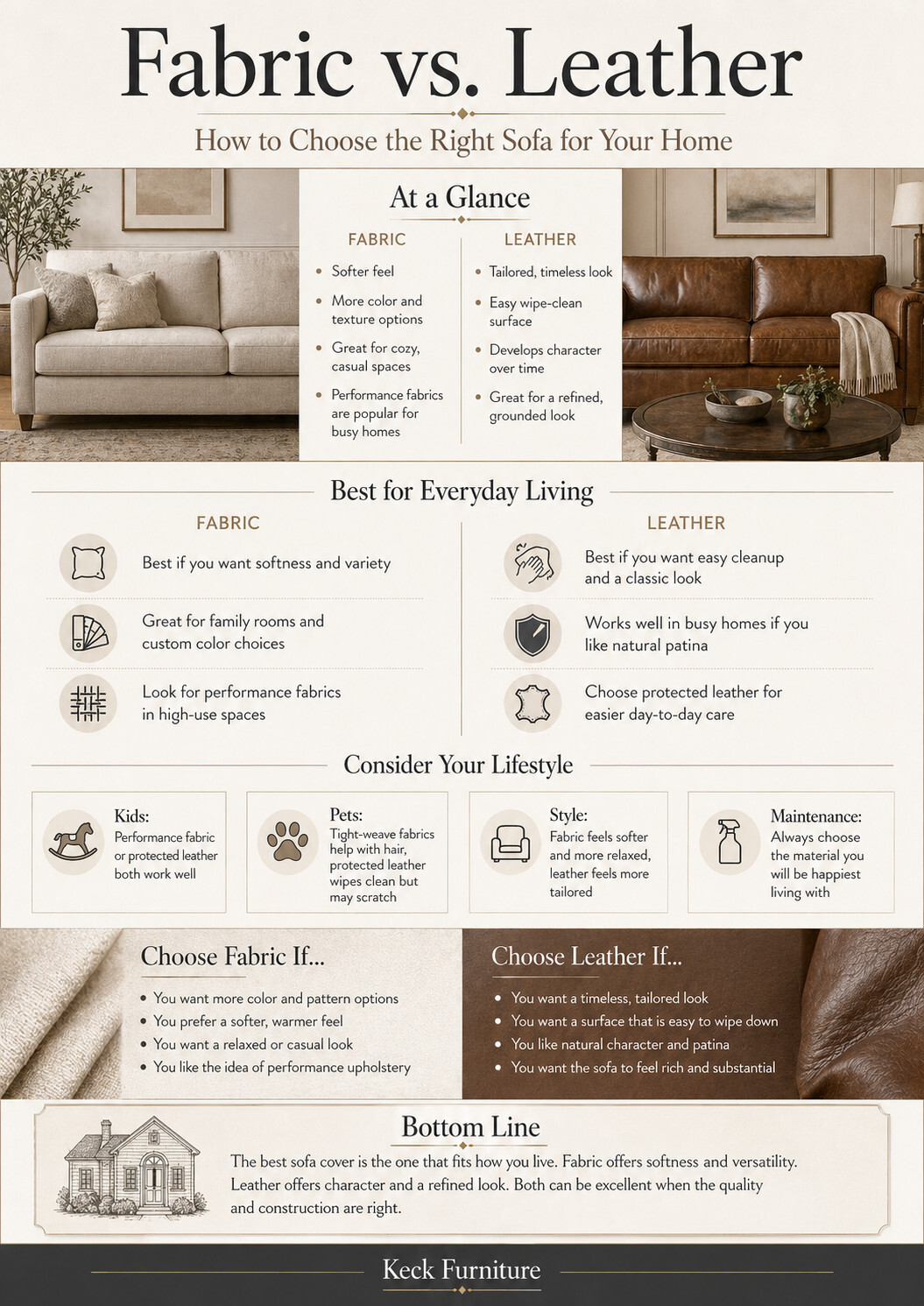
Choosing between fabric and leather is one of the biggest decisions you will make when selecting a sofa. The frame, size, and cushion comfort matter, but the cover is what you see, touch, clean, and live with every day.
There is not one right answer for every home. Fabric and leather each have strengths. The best choice depends on your lifestyle, how the room is used, whether you have kids or pets, your comfort preferences, and the look you want the room to have.
Here is how to decide which one fits your home best.
Start with how the sofa will be used
Before comparing fabric and leather, think about the room.
Ask yourself:
- Is this the main everyday sofa?
- Will kids or pets use it?
- Is it used mostly for TV, lounging, or conversation?
- Do people eat or drink on it?
- Does the room get strong sunlight?
- Do you want a casual look or a more tailored look?
- Are you willing to maintain it, or do you want something easier day to day?
A sofa in a formal sitting room has different needs than a sectional in a family room. The right material should match the life of the room, not just the style of the room.
Why choose a fabric sofa?
Fabric is often the most flexible choice. It gives you the widest range of colors, patterns, textures, and price points. If you want a specific look, from soft and casual to clean and tailored, fabric usually gives you more options.
Fabric is usually softer right away
Most fabric sofas feel comfortable immediately. They tend to feel warmer and softer to the touch than leather, which can feel cooler at first.
Fabric can be a great fit if you want the sofa to feel relaxed, cozy, and inviting from day one.
Fabric gives you more design choices
This is one of fabric’s biggest advantages. You can choose:
- Solid colors
- Textured neutrals
- Performance fabrics
- Patterns
- Velvets
- Chenilles
- Tweeds
- Linen looks
- Family-friendly woven fabrics
That variety makes it easier to coordinate with rugs, flooring, paint colors, wood tones, and window treatments.
Performance fabric has changed the conversation
Modern performance fabrics are a strong option for busy homes. Many are designed to resist stains, clean more easily, and handle heavier use better than traditional upholstery fabrics.
That does not mean every performance fabric is the same. You still need to look at the specific fabric, cleaning code, texture, color, and how it feels in person. Upholstery cleaning codes matter because they tell you whether a fabric should be cleaned with water, solvent, either, or only vacuuming and brushing.
Fabric can hide wear well, depending on the fabric
A textured fabric can be forgiving because it hides small marks, lint, and everyday use better than a perfectly smooth surface. Mid-tone fabrics are often easier to live with than very light or very dark covers because they show less contrast from dust, pet hair, or minor marks.
Where fabric needs more thought
Fabric is not automatically easier. It depends heavily on the specific fabric.
Fabric can stain if the wrong cover is chosen
Light, delicate, or non-performance fabrics may not be the best fit for a hard-working family room. If spills are likely, choose a fabric with a cleaning code and performance story that match your expectations.
Fabric can hold pet hair and lint
Some fabrics grab hair more than others. If you have pets, pay attention to texture. A tight weave is usually easier to clean than a loose, nubby fabric where hair and claws can catch.
Fabric may show wear patterns over time
Seat cushions, arm tops, and favorite lounging spots tend to get the most use. Better fabric, better cushions, and proper rotation can help, but fabric will still age differently depending on the fiber, weave, color, and use.
Why choose a leather sofa?
Leather has a different appeal. It feels rich, natural, and timeless. It can bring a tailored look to a room without needing pattern or extra detail. Good leather also develops character over time, which is part of why many people love it.
Leather has a clean, classic look
Leather can work in traditional, transitional, rustic, and modern rooms. It often has a more tailored feel than fabric, especially in darker browns, warm tans, black, or softer neutral leathers.
It is a strong choice if you want the sofa to feel grounded and substantial.
Leather can be easier to wipe clean
For many everyday spills, leather is easier to wipe than fabric, especially protected or finished leather. This is one reason leather is often considered for homes with kids, pets, or heavy use.
That said, leather still needs care. It is not maintenance-free.
Leather ages differently than fabric
One of leather’s biggest strengths is patina. Quality leather can soften and gain character with use. Instead of looking worn out immediately, it can look more lived-in and natural over time.
The type of leather matters. Full grain, top grain, corrected grain, aniline, semi-aniline, and protected leathers all look, feel, and age differently. Full grain and top grain are generally considered higher quality leather categories, while corrected or protected leathers may offer a more uniform look and easier day-to-day care.
Leather does not trap dust the same way fabric can
Leather has a smoother surface, so dust, crumbs, and pet hair often sit on top rather than settling into the weave. For some households, that makes regular cleaning feel simpler.
Where leather needs more thought
Leather is durable, but it is not indestructible.
Leather can scratch
Pets, sharp objects, belt buckles, and keys can mark leather. Some people like the character that comes with leather aging. Others prefer a cleaner, more uniform look. If scratches will bother you, choose the leather carefully.
Protected leathers are usually more forgiving than very natural, untreated leathers.
Leather can feel cooler or warmer depending on the room
Leather responds to temperature more than fabric. It may feel cool when you first sit down in winter, or warmer in direct sun. In most homes, this is manageable, but it is worth considering if comfort-to-the-touch is a top priority.
Leather usually costs more
Quality leather typically costs more than fabric. The price difference varies by brand, leather type, sofa size, and construction. If you are comparing a leather sofa to a fabric sofa, make sure you are comparing similar quality levels.
A low-quality leather or bonded material is not the same decision as a good top grain leather sofa.
Fabric vs. leather with kids
Both can work, but the right choice depends on your household.
Fabric may be better if:
- You want a softer, warmer feel
- You want more color and texture options
- You choose a true performance fabric
- You prefer a casual, family-room look
- You are worried about scratches
Leather may be better if:
- You want easy wipe-down cleaning for many everyday messes
- You prefer a more tailored look
- You are comfortable with natural marks and patina
- You choose a protected leather for heavy use
For kids, the biggest mistake is choosing based only on material category. A good performance fabric may outperform a delicate leather in one home, while a protected leather may outperform a delicate fabric in another.
Fabric vs. leather with pets
Pets change the decision.
If you have dogs
Leather can be easier to wipe clean, especially with shedding dogs, but claws can scratch it. Fabric may hide scratches better, but certain textures can hold hair.
Good options to consider:
- Protected leather
- Distressed leather if you like character
- Tight-weave performance fabric
- Medium-tone fabric that hides hair better
If you have cats
Claws are the biggest concern. Some cats may scratch leather, while loose weaves can invite snagging. A tight, smooth, low-loop fabric is usually safer than a chunky or open weave.
No sofa material is completely pet-proof. The best choice is the one that matches your pet’s habits and your tolerance for visible wear.
Comfort: fabric and leather feel different
Comfort is not only about cushions. The cover changes how the sofa feels.
Fabric comfort
Fabric usually feels softer, warmer, and more relaxed. It can feel especially comfortable for long sitting, napping, and casual family use.
Leather comfort
Leather can feel smooth, supportive, and tailored. It may feel firmer at first, then soften with use depending on the leather and cushion construction.
When possible, sit on both. The difference is immediate.
Style: what each material says in a room
Fabric gives you softness and flexibility
Fabric is great when you want the sofa to blend into the room or support a specific color palette. It works well when the room already has wood, leather chairs, patterned rugs, or strong architectural features.
Leather gives you structure and presence
Leather naturally becomes a focal point. A leather sofa can add warmth, depth, and richness, especially in rooms with wood floors, natural textures, and neutral walls.
A common design approach is to mix materials. For example:
- Leather sofa with fabric chairs
- Fabric sofa with leather recliner
- Leather sectional with soft textured pillows
- Fabric sofa with leather ottoman
The room often feels more collected when not every piece is the same material.
Maintenance: what to expect
Fabric maintenance
Fabric care depends on the cleaning code. Some fabrics allow water-based cleaning, some require solvent-based cleaning, and some should only be vacuumed or lightly brushed. Always check the fabric’s cleaning code before treating stains.
Basic fabric care:
- Vacuum regularly
- Rotate cushions if the design allows
- Blot spills quickly
- Avoid rubbing stains aggressively
- Follow the cleaning code
Leather maintenance
Leather care depends on the leather type and finish. Protected leathers are generally easier to maintain than very natural leathers. Natural leathers may show more marks, color variation, and patina.
Basic leather care:
- Dust regularly with a soft cloth
- Wipe spills promptly
- Keep away from harsh cleaners
- Avoid direct sunlight when possible
- Use leather care products recommended for that leather type
Which one lasts longer?
This depends more on quality than category.
A well-built sofa in a good leather can last a long time. A well-built sofa in a high-quality performance fabric can also hold up beautifully. The frame, suspension, cushion quality, tailoring, and cover all matter.
Do not judge durability by fabric vs. leather alone. Judge the whole piece.
A better question is:
“Which cover will age in a way I can live with?”
If you want softness and color flexibility, fabric may be right. If you like patina and a rich, natural surface, leather may be right.
Choose fabric if...
Fabric is probably the better choice if you want:
- More color, texture, and pattern options
- A softer feel from day one
- A relaxed or cozy look
- A lower starting price in many cases
- Performance options for family use
- A material that may hide small scratches better than leather
Choose leather if...
Leather is probably the better choice if you want:
- A tailored, timeless look
- A surface that can be easier to wipe clean
- Natural character and patina over time
- A rich material that becomes part of the room’s personality
- Less concern about fabric pilling, lint, or trapped dust
- A sofa that feels substantial and grounded
The best answer may be both
Many of the best living rooms mix fabric and leather. You do not have to choose one material for every piece.
A few combinations that work well:
- Fabric sofa with leather recliner
- Leather sofa with two fabric chairs
- Fabric sectional with leather ottoman
- Leather sofa with textured fabric pillows
- Fabric sofa with leather accent chair
Mixing fabric and leather adds depth and keeps the room from feeling too matched. The key is repeating colors or tones so the mix looks planned.
For example, a warm brown leather recliner can work beautifully with a neutral fabric sofa if the leather tone is repeated in wood furniture, picture frames, a rug, or accent pillows.
Final decision checklist
Before choosing fabric or leather, ask:
- How often will this sofa be used?
- Who will use it most?
- Are pets or kids part of the decision?
- Do I want soft and cozy or tailored and structured?
- Do I want color and texture options, or natural character?
- Am I comfortable with patina, scratches, and variation?
- What level of maintenance feels realistic?
- Does this material fit the room’s style and the rest of the furniture?
The best sofa cover is the one that fits how you live. Fabric gives you softness, options, and versatility. Leather gives you character, richness, and a naturally tailored look. Both can be excellent when the quality, construction, and room plan are right.