
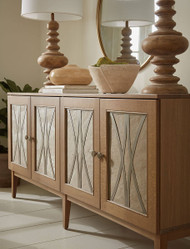
Dining Room Wall Decor: Scale Rules for Art Over a Buffet or Sideboard
24th Jul 2026
A buffet or sideboard can make a dining room feel finished, but the wall above it matters just as much as the furniture itself. When the art, mirror, lamps, and accessories are scaled correctly, the whole wall feels balanced and intentional. When they are too small, too high, or disconnected from the furniture below, the dining room can feel unfinished even if the furniture is beautiful.
The goal is not to fill the wall with decor. The goal is to create a strong focal point that relates to the buffet or sideboard, fits the dining room, and supports the style of the space.
Here is how to choose the right size art, mirror, or wall decor over a buffet or sideboard.
Start with the sideboard, not the wall
The most common mistake is choosing wall decor based only on the empty wall. Instead, start with the furniture below it.
The art should relate to the buffet or sideboard because they are read together as one visual grouping.
Look at:
-
Width of the sideboard
-
Height of the sideboard
-
Wall height above it
-
Ceiling height
-
Lamps or decor on top
-
Dining table size
-
Light fixture placement
-
Nearby windows, trim, or doorways
-
Style of the room
A large blank wall may tempt you to go oversized, but the art still needs to feel connected to the furniture below. The buffet or sideboard is the anchor.
Art width: aim for about two-thirds to three-quarters of the sideboard
A strong starting rule is to choose art that is about two-thirds to three-quarters the width of the buffet or sideboard.
This keeps the artwork large enough to feel intentional without making it wider than the furniture below.
Example
If your sideboard is 72 inches wide:
-
Two-thirds width is about 48 inches
-
Three-quarters width is about 54 inches
A piece of art around 48 to 54 inches wide will usually feel well scaled.
If the art is only 24 inches wide over a 72 inch sideboard, it will likely look too small. If the art is wider than the sideboard, the wall can feel top-heavy.
Do not let the art overpower the sideboard
The art should usually be narrower than the sideboard.
This gives the furniture visual control and keeps the grouping grounded. When the art extends beyond the sideboard on both sides, it can look like the wall decor is too large for the piece below it.
There are exceptions, especially with large gallery walls or architectural wall treatments, but for most dining rooms, the art should stay within the width of the buffet or sideboard.
A good rule:
-
Art should be wide enough to feel connected
-
Art should not be so wide that it overpowers the furniture
-
The sideboard should still feel like the base of the arrangement
Hanging height: keep the art close enough to relate
Art over a buffet should not float high above it.
A practical spacing range is usually about 6 to 10 inches between the top of the sideboard and the bottom of the artwork. This can vary depending on the height of the furniture, size of the art, ceiling height, and whether lamps or accessories are sitting on the sideboard.
If the art is too high, it feels disconnected. If it is too low, it may interfere with lamps, serving space, or tabletop styling.
Simple hanging guide
-
Leave about 6 to 10 inches above the sideboard
-
Keep the art visually connected to the furniture
-
Adjust for lamps, sconces, and taller accessories
-
Do not hang art so high that the sideboard and art feel separate
Dining rooms are used seated as well as standing, so art does not need to be pushed too high.
Center the art over the sideboard
If the sideboard is not centered on the wall, center the art over the sideboard, not the entire wall.
This is important.
The eye reads the art and sideboard together. If the art is centered on the wall but not centered over the furniture, the grouping can feel off.
Centering over the furniture creates a more intentional arrangement.
This applies to:
-
Single large artwork
-
Mirror over a sideboard
-
Pair of prints
-
Gallery wall
-
Set of framed pieces
-
Large wall sculpture
The sideboard is the anchor. Let it guide the wall decor.
Single large artwork: the cleanest option
One large piece of art is often the easiest way to style the wall over a buffet or sideboard.
It works well when:
-
The room needs a focal point
-
The sideboard is wide
-
You want a clean look
-
The dining room already has pattern in the rug or chairs
-
You want the wall to feel polished without clutter
Good single-art shapes:
-
Horizontal rectangle over a long sideboard
-
Square art over a shorter sideboard
-
Tall vertical art over a narrow cabinet
-
Large canvas for a softer look
-
Framed art for a more finished look
For most dining rooms, a horizontal piece works well because it follows the shape of the buffet.
Pair of prints: balanced and classic
A pair of prints can work beautifully over a sideboard, especially in traditional, transitional, or classic dining rooms.
A pair works well when:
-
The sideboard is medium to wide
-
You want symmetry
-
The dining room has a formal feel
-
You are using matching lamps
-
You want a calm, balanced wall
When using two pieces, think of them as one total unit.
The combined width of both frames plus the space between them should usually be about two-thirds to three-quarters of the sideboard width.
Spacing between the two frames can often be around 2 to 4 inches, depending on frame size. Larger art can handle slightly more space. Smaller art usually needs tighter spacing.
Three pieces or a grid: good for longer sideboards
A set of three pieces or a clean grid can work well above a longer buffet or sideboard.
This works especially well when:
-
The sideboard is long
-
You want a tailored look
-
The art is smaller but part of a set
-
The dining room needs rhythm
-
You want a less formal alternative to one large piece
Good options:
-
Three vertical prints
-
Three square frames
-
Four-piece grid
-
Six-piece grid
-
Series of botanical prints
-
Black and white photography set
-
Framed textile or pattern series
Keep spacing consistent. Uneven spacing can make a grid look messy quickly.
A grid should feel crisp and intentional, not like several small pieces were added to fill space.
Gallery wall over a sideboard: keep the outside shape controlled
A gallery wall can work over a buffet, but it needs structure.
The key is to make the gallery wall read as one large shape. That shape should still relate to the sideboard below it.
A gallery wall works well when:
-
The dining room is casual or collected
-
You want a personal look
-
You have family pieces, art, or photography
-
The sideboard is simple
-
You want the room to feel layered
To keep it polished:
-
Keep the overall width within the sideboard width
-
Use a consistent frame color or finish
-
Keep spacing even
-
Use one larger piece as the anchor
-
Balance small pieces with medium pieces
-
Keep the bottom edge close enough to the sideboard
A gallery wall should not feel like it is drifting up the wall. It should still belong to the sideboard.
Mirror over a sideboard: when it works
A mirror can be a strong choice above a buffet or sideboard, especially in a dining room that needs more light, depth, or visual openness.
A mirror works well when:
-
The dining room is small
-
The room needs more reflected light
-
There is a chandelier or window worth reflecting
-
The sideboard is a serving piece
-
The style is traditional, transitional, or classic
-
You want a lighter alternative to heavy artwork
Good mirror shapes:
-
Round mirror over a straight sideboard
-
Rectangular mirror over a long buffet
-
Arched mirror for softness
-
Framed mirror to add finish
-
Antique-style mirror for character
A mirror should still follow scale rules. It should usually be wide enough to relate to the sideboard, but not wider than the furniture below it.
Be careful what the mirror reflects
Before choosing a mirror, stand where the mirror will hang and look at what it will reflect.
A mirror should reflect something pleasant, such as:
-
Chandelier
-
Window light
-
Artwork
-
Drapery
-
Dining table centerpiece
-
Architectural detail
-
A clean view across the room
Avoid reflecting:
-
Kitchen clutter
-
A blank ceiling
-
A hallway
-
A messy counter
-
A television
-
An awkward corner
A mirror can make a dining room feel larger and brighter, but only if the reflection helps the room.
Round mirror vs rectangular mirror
Both can work, but they create different effects.
Round mirror
A round mirror softens the hard lines of a buffet, dining table, and rectangular room.
Good for:
-
Square or rectangular sideboards
-
Rooms with many straight lines
-
Transitional spaces
-
Smaller dining rooms
-
Casual or refined looks
Rectangular mirror
A rectangular mirror feels more structured and classic.
Good for:
-
Long buffets
-
Formal dining rooms
-
Traditional spaces
-
Rooms with symmetrical lamps
-
Wider walls
Arched mirror
An arched mirror adds height and softness.
Good for:
-
Rooms with tall ceilings
-
Traditional or transitional dining rooms
-
Spaces that need a vertical focal point
-
Sideboards that are not overly wide
Choose the shape that balances the furniture and room architecture.
Scale art with lamps and accessories
If you plan to place lamps on the sideboard, account for them before hanging art.
Lamps add height and width to the grouping. They can make smaller art feel better scaled, but they can also crowd a large piece.
Good combinations:
-
Large art with low accessories
-
Medium art with two lamps
-
Mirror with matching lamps
-
Pair of prints with one lamp and a vase
-
Large art with simple bowls or serving pieces
If the lamps are tall, leave enough space between the lamps and artwork so the wall does not feel cramped.
If the art is large, keep sideboard styling lower and simpler.
Buffet lamps can help frame the wall decor
Buffet lamps are a classic dining room detail. They can make the sideboard feel more finished and add softer light in the evening.
They work well when:
-
The sideboard is long enough
-
There is enough surface space
-
The art or mirror is centered above
-
The dining room needs softer lighting
-
The room has a traditional or transitional style
Use lamps carefully in small dining rooms. Tall lamps on a small sideboard can make the wall feel crowded. In tighter spaces, one lamp or a pair of slender lamps may work better than bulky bases.
Sconces beside art or a mirror
Wall sconces can be beautiful on either side of art or a mirror, but scale and placement matter.
Sconces work well when:
-
The sideboard is centered on a wall
-
The art or mirror is not too wide
-
There is enough wall space on both sides
-
Electrical placement is possible
-
You want a more built-in, polished look
When using sconces, the art or mirror may need to be slightly narrower so the whole grouping does not extend beyond the sideboard.
Think of the arrangement as one unit:
-
Sconce
-
Art or mirror
-
Sconce
That full width should still feel connected to the furniture below.
Wall decor should fit the dining room style
The art or mirror should support the room, not fight it.
Traditional dining room
Good choices:
-
Framed landscapes
-
Botanical prints
-
Gilded mirror
-
Antique-style mirror
-
Symmetrical pair of art
-
Classic still life
-
Muted traditional artwork
Transitional dining room
Good choices:
-
Large abstract art
-
Framed neutral print
-
Round mirror
-
Clean pair of prints
-
Soft landscape
-
Modern botanical
-
Simple framed textile
Modern dining room
Good choices:
-
Large-scale abstract
-
Black and white photography
-
Minimal line art
-
Oversized mirror
-
Sculptural wall piece
-
Clean grid of frames
Farmhouse or relaxed dining room
Good choices:
-
Landscape art
-
Woven wall decor
-
Wood-framed mirror
-
Vintage-style prints
-
Soft botanicals
-
Simple black or natural frames
Collected dining room
Good choices:
-
Mixed gallery wall
-
Vintage art
-
Family pieces
-
Framed textile
-
Antique mirror
-
Art with personal meaning
The wall decor should feel like part of the room’s design direction.
Use color to connect the art to the room
Art over a sideboard should connect to at least one other element in the room.
It can repeat:
-
Rug color
-
Dining chair fabric
-
Wall color
-
Wood tone
-
Metal finish
-
Window treatment color
-
Upholstery color
-
Chandelier finish
-
Accent color from the table centerpiece
The art does not need to match the room exactly. It just needs a connection.
For example:
-
A landscape with warm browns can connect to a wood table.
-
A blue-gray abstract can connect to dining chair fabric.
-
A black frame can connect to chandelier metal.
-
A cream mat can connect to drapery.
-
A botanical print can connect to green accents or plants.
Connection is what keeps wall decor from feeling random.
Do not forget the buffet top
The wall decor and the buffet top should work together.
A sideboard often needs a few pieces on top, but not too many.
Good buffet styling options:
-
Pair of lamps
-
Large bowl
-
Tray
-
Vase with branches
-
Stack of books
-
Candlesticks
-
Small sculpture
-
Leaning art
-
Serving pieces
-
Seasonal centerpiece
Leave empty space so the sideboard can still function for serving.
A buffet is often used during holidays, gatherings, and meals. Styling should look good, but not make the surface unusable.
Create a simple triangle
One easy styling method is to create a visual triangle.
For example:
-
Tall lamp on one side
-
Medium vase on the other side
-
Lower bowl or tray in the center
This creates height variation and keeps the sideboard from looking flat.
If you are using matching lamps, the triangle becomes more symmetrical:
-
Lamp on left
-
Art or mirror in center
-
Lamp on right
-
Lower decor across the surface
Both symmetrical and asymmetrical styling can work. Symmetry feels more formal. Asymmetry feels more relaxed and collected.
When to leave the wall simple
Not every dining room needs a dramatic wall.
A simpler wall may be best if:
-
The dining table is already a statement piece
-
The chandelier is bold
-
The wallpaper is patterned
-
The rug has strong pattern
-
The room is small
-
The sideboard has heavy detailing
-
There are large windows nearby
In these rooms, one quiet mirror, simple artwork, or pair of prints may be enough.
The wall above the sideboard should support the room, not compete with everything else.
What if the sideboard is under a window?
If the sideboard sits under a window, the window often becomes the wall decor.
In that case, focus on:
-
Drapery or shades
-
Lamps that do not block the window
-
Low styling
-
A centered bowl or tray
-
Small art leaned to one side if appropriate
-
Greenery or branches
Do not force art where the window already provides the focal point.
Window treatments become especially important because they frame the sideboard visually.
What if the wall is very tall?
Tall ceilings can make art over a sideboard feel too small if the piece is undersized.
In rooms with tall ceilings, consider:
-
Larger vertical art
-
Taller mirror
-
Pair of stacked pieces
-
Grid of art
-
Sconces to add height
-
Tall lamps
-
Larger branches in a vase
-
Art with a stronger frame
Even with tall ceilings, do not hang the art too high. Keep the artwork related to the sideboard. Use larger scale, not excessive height, to fill the wall.
What if the sideboard is short or low?
A low sideboard may need taller wall decor to balance it.
Good options:
-
Taller vertical mirror
-
Large framed art
-
Pair of vertical prints
-
Lamps to add height
-
Gallery wall with a controlled shape
-
Tall branches or sculptural vase
The goal is to build height above the furniture while keeping the arrangement visually connected.
If the art is too small over a low sideboard, the wall may feel unfinished.
What if the sideboard is very long?
A long buffet needs stronger wall decor.
Good options:
-
One large horizontal artwork
-
Pair of large framed pieces
-
Set of three prints
-
Long mirror
-
Gallery wall
-
Wide wall sculpture
-
Art plus sconces
Avoid placing one small vertical piece over the center of a long buffet. It will usually look under-scaled.
A long sideboard needs width, rhythm, or repetition above it.
Common mistakes to avoid
Mistake 1: Art is too small
Small art over a wide sideboard can look like an afterthought. Go larger than you think.
Mistake 2: Art is hung too high
Art should relate to the sideboard, not float near the ceiling.
Mistake 3: Art is wider than the sideboard
This can make the wall feel top-heavy unless it is part of a carefully planned gallery or wall treatment.
Mistake 4: Centering art on the wall instead of the furniture
If the sideboard is the anchor, center the art over the sideboard.
Mistake 5: Forgetting lamps and accessories
Wall decor should be planned with the buffet top, not separately.
Mistake 6: Using a mirror without checking the reflection
A mirror is only as good as what it reflects.
Mistake 7: Filling every inch
A dining room wall needs balance, not clutter.
Quick size guide
Sideboard under 48 inches wide
Consider:
-
One medium vertical piece
-
One round mirror
-
Pair of smaller prints
-
Simple wall decor
-
Minimal lamps or one lamp
Sideboard 54 to 72 inches wide
Consider:
-
One large horizontal artwork
-
One large round mirror
-
Pair of framed prints
-
Three smaller pieces
-
Mirror with lamps
Sideboard 78 inches or wider
Consider:
-
Oversized horizontal art
-
Pair of large prints
-
Three-piece series
-
Long mirror
-
Gallery wall
-
Art with sconces
Narrow sideboard
Consider:
-
Vertical art
-
Arched mirror
-
Tall mirror
-
One lamp
-
Simple styling
Long buffet
Consider:
-
Wide art
-
Large mirror
-
Repeated art series
-
Pair of lamps
-
Stronger centerpiece
Dining room wall decor checklist
Before hanging anything, ask:
-
Is the art or mirror scaled to the sideboard?
-
Is it about two-thirds to three-quarters of the sideboard width?
-
Is it narrower than the sideboard?
-
Is it centered over the furniture?
-
Is it close enough to feel connected?
-
Does it leave room for lamps or accessories?
-
Does the color connect to the room?
-
Does the style fit the dining table, chairs, and lighting?
-
If using a mirror, does it reflect something attractive?
-
Does the whole wall feel balanced, not crowded?
The best wall decor over a buffet or sideboard feels like it belongs to the furniture below it.
Final thoughts
Dining room wall decor is all about scale and connection. Art over a buffet or sideboard should be large enough to feel intentional, close enough to relate to the furniture, and centered over the piece below it.
A single large artwork, pair of prints, mirror, grid, gallery wall, or sconces can all work. The right choice depends on the width of the sideboard, the height of the wall, the dining room style, and how much visual weight the room needs.
When the proportions are right, the buffet wall becomes one of the strongest focal points in the dining room.