
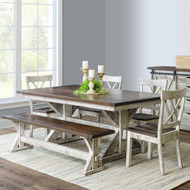
Dining Chair Spacing Rules: How Many Chairs Fit Without Feeling Crowded
15th Apr 2026
The easiest way to make a dining set feel cramped is over-seating the table. It looks great until elbows bump, chairs scrape, and nobody wants to be the person stuck on the corner. The fix is simple: plan for elbow room first, then confirm you still have enough clearance to pull chairs out and walk behind them.
Below are the spacing rules that work in real homes, plus quick sizing shortcuts for rectangular and round tables.
Rule 1: Plan your “space per person” before counting chairs
A solid comfort baseline is 24 to 26 inches of table edge per person.
If you like lingering dinners, use larger chairs, or have armchairs, planning closer to 30 inches per person feels noticeably better.
Quick cheat
-
24 inches per person: comfortable in most homes
-
30 inches per person: roomy, great for larger chairs or frequent hosting
Rule 2: Chairs need breathing room between them
Even if the math says the chairs fit, they still need separation so people are not shoulder to shoulder.
A practical guideline is 2 to 6 inches between chairs, depending on chair width and comfort preference.
Another way to think about it: many seating guides recommend 24 to 30 inches from chair center to chair center for comfortable elbow room.
Rule 3: Do not forget the clearance behind chairs
This is the rule that decides whether the room feels functional day to day.
Many space-planning guides recommend at least 36 inches from the dining table edge to a wall or furniture so chairs can pull out and people can move.
If the dining area is a pass-through or you entertain often, 42 to 48 inches is more comfortable.
How to calculate how many chairs fit on a rectangular table
-
Decide your comfort number: 24 inches (comfortable) or 30 inches (roomy).
-
Divide the usable edge length by that number.
-
Double check table legs and bases. Pedestal and trestle bases often seat more easily because legs do not steal knee space. (This is why two tables with the same size can seat differently.)
Common rectangular table seating guide
These are typical comfort ranges using the 24 inch rule, assuming standard chairs.
-
72 inch (6 ft) table: usually seats 6 comfortably
-
96 inch (8 ft) table: often seats 8, sometimes 10 with tighter spacing or smaller chairs
If you are trying to add end chairs, confirm the table has enough width and overhang for knees and chair arms to clear.
How to calculate how many chairs fit on a round table
Round tables feel social, but they reach “tight” faster than people expect because everyone shares one continuous edge.
A common planning guideline is still about 24 inches of table edge per person.
Common round table seating guide
-
48 inch round: often seats 4 comfortably
-
60 inch round: commonly seats 6 to 8 depending on chair size
-
60 to 72 inch round: can seat 8 with slimmer chairs, but comfort depends heavily on chair width
If you want 8 seats to feel comfortable most of the time, many homes do better with a longer rectangular table or a larger round paired with smaller scale chairs.
When to use benches or banquettes
If you need extra seats without extra bulk, benches and banquettes can help because they eliminate chair arms and reduce gaps. Some seating guides note you can tighten spacing to around 21 inches per person with armless seating or benches, but 24 inches remains the comfort standard.
The “crowded” warning signs
If you see any of these, reduce chair count or size up the table:
-
You cannot pull a chair out without bumping the next chair.
-
People have to scoot sideways to sit down.
-
Chairs block walkways when pulled out because there is not enough 36 inch clearance behind them.