
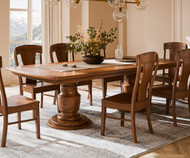
Choosing a Dining Table Finish That Works with Floors and Cabinets
4th Apr 2026
Choosing a dining table finish is rarely about finding a perfect match. It is about making the table feel like it belongs with the finishes that are already “locked in,” especially floors and kitchen cabinets. The right choice keeps the room from feeling busy, mismatched, or too matchy.
This guide walks you through a simple decision process that works whether you have warm hardwood floors, gray LVP, stained cabinets, or painted cabinetry.
Start with what you cannot easily change
Before you look at table finishes, identify the fixed finishes that will influence the space most:
-
Flooring (the biggest wood surface in the room)
-
Kitchen cabinets (in open layouts, they read as one visual field)
-
Any nearby built-ins, trim, or beams
-
Large adjacent wood pieces (island, sideboard, hutch)
Your dining table finish needs to relate to these, not fight them.
The real key: undertone, not “light vs dark”
Two finishes can both be “medium brown” and still clash if their undertones disagree.
Use this quick filter:
-
Warm undertones: honey, amber, red, orange
-
Cool undertones: gray, ash, weathered, slightly green
-
Neutral undertones: balanced, not strongly warm or cool
In most rooms, your best results come from keeping undertones in the same family. You can still mix light and dark, but the undertone should feel compatible.
Decide what you want the table to do in the space
Option A: Blend in
Best when:
-
The room is small and you want it to feel calm
-
Cabinets and floors already have a lot of variation
-
You prefer a softer, more seamless look
How to do it:
-
Choose a table finish that is close in undertone to the floor
-
Keep contrast subtle (slightly lighter or slightly darker, not identical)
Option B: Stand out on purpose
Best when:
-
You want the dining area to feel defined in an open concept layout
-
Floors and cabinets are similar in tone and the room feels flat
-
You want the table to read as a focal point
How to do it:
-
Choose clear contrast in value (light table on darker floor, or dark table on lighter floor)
-
Keep undertones consistent so the contrast looks intentional
Quick finish rules that prevent most mistakes
1) Avoid “almost matching”
If the table finish is close but not quite the same as the floor or cabinets, it often reads like a mistake. Either:
-
Match very intentionally, or
-
Create obvious contrast
2) Use a rug to separate similar woods
If your floor and table are in the same tone family, a rug under the table creates a visual break so the woods do not blur together.
3) Repeat the table finish somewhere else
A table finish looks more intentional when it shows up at least one more time in the space:
-
Sideboard or buffet
-
Picture frames
-
Open shelving
-
Bar cabinet or serving tray
4) Sheen matters
A glossy table next to matte floors or matte cabinetry can look disconnected even if the color is right. If you want an easy blend, keep sheen levels similar.
Best table finishes for common floor and cabinet combinations
Warm wood floors with white cabinets
This is one of the most flexible setups.
Good table finish directions:
-
Natural or light oak for a clean, layered look
-
Medium walnut tones for warmth and contrast
-
Painted table base with wood top if you want the table to connect to the cabinets but still bring wood into the room
Avoid:
-
A table that tries to match the floor exactly but lands slightly off
Warm wood floors with stained wood cabinets
This is where undertones matter most.
Good table finish directions:
-
Stay in the same undertone family as the cabinets, then change the depth
-
Example: warm cabinets, choose either a noticeably lighter warm table or a noticeably deeper warm table
-
If cabinets are very busy or heavily grained:
-
Choose a simpler, calmer table finish so the room does not feel like competing wood patterns
Gray or cool toned floors with white or gray cabinets
Cool floors can make warm woods look extra orange, even if you liked them in the showroom.
Good table finish directions:
-
Neutral wood finishes (natural, lightly washed, or balanced browns)
-
Black or deep charcoal bases with a lighter wood top
-
Medium cool browns rather than red leaning stains
Avoid:
-
Strong red or orange leaning stains unless you are intentionally warming up the whole palette with other warm elements
Dark floors with light cabinets
This can look sharp, but you need enough contrast so the dining set does not disappear.
Good table finish directions:
-
Medium to light wood to keep the dining area from feeling heavy
-
Wood top with a lighter base if you want a softer look
-
Black table can work if you repeat black elsewhere (lighting, hardware, frames) and keep the rest of the room balanced
Light floors with light cabinets
This can feel airy, but sometimes lacks definition.
Good table finish directions:
-
Go one or two steps darker than the floor to ground the room
-
Add contrast through the base (black base, metal base, or darker stained base)
-
Use a rug to add structure under the table
Table top and base: an easy way to make finishes work
If you are unsure, split the finish story:
-
Wood top + painted base (connects to painted cabinets, keeps wood present)
-
Wood top + metal base (modern, less “wood competing with wood”)
-
Two tone wood (top slightly different than base to bridge between floor and cabinetry)
This approach is especially helpful in open concept layouts where the table has to relate to both floors and cabinets at the same time.
Sample the finish in your lighting, not just in a showroom
Wood finishes change dramatically across lighting conditions. Always compare samples:
-
In daylight
-
Under your evening lighting
-
Next to the floor and cabinet finish, not in isolation
If possible, view a larger sample than a tiny chip. Small samples can hide undertone and grain.
A simple step by step decision process
-
Identify your fixed finishes: floor, cabinets, nearby built-ins.
-
Decide your intent: blend in or stand out.
-
Pick an undertone family that fits the room: warm, cool, or neutral.
-
Choose contrast: either clearly lighter or clearly darker than the floor or cabinets.
-
Decide sheen: keep it consistent with surrounding finishes for an easier look.
-
Add a separator if needed: rug, upholstery, or metal base.
-
Repeat the finish at least once elsewhere so it looks intentional.