
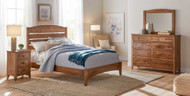
Bedroom Furniture Proportions: Preventing an Overcrowded Look
1st Apr 2026
A bedroom can have beautiful furniture and still feel cramped if the scale is off or the clearances are too tight. Overcrowding is usually not about owning “too much” furniture. It is more often about a few pieces that are too large for the footprint, plus walkways that get squeezed.
This guide covers the proportions that matter most, the spacing rules that keep the room functional, and the easiest fixes when a bedroom feels stuffed.
Start with the biggest piece: the bed footprint
The bed sets the scale for everything else. When the bed is oversized for the room, every other piece becomes a compromise.
Measure the full footprint, not just the mattress
Frames and headboards add width and depth. Some beds add several inches on each side and a few inches at the foot. Always measure the full assembled footprint so your clearances are real.
Protect the two main walkways
Most bedrooms function best when you can move comfortably:
-
Along both sides of the bed (or at least one side in smaller rooms)
-
At the foot of the bed toward doors, closets, and dressers
A practical baseline is aiming for about 24 inches minimum for a side walkway, with 30 inches or more feeling much better if the room allows. If you routinely have two people getting ready at once, closer to 30 to 36 inches is a noticeable upgrade.
Nightstands: size them to the bed, not the wall
Nightstands that are too large crowd the sides of the bed. Nightstands that are too small look lost and often create clutter because they lack surface area.
A reliable height target
Nightstand height typically looks and works best when it is close to the top of the mattress, often within a couple inches. That keeps reaching for a lamp, phone, or water glass comfortable.
A reliable width target
-
In smaller rooms, choose nightstands that give you function without stealing walkway space.
-
In larger rooms, nightstands can be wider, but the bed should still feel like the main piece, not squeezed between two cabinets.
If space is tight, wall mounted nightstands or narrow nightstands can give you storage without visually crowding the room.
Dresser and chest proportions: avoid depth problems first
In an overcrowded bedroom, depth is usually the issue, not length.
Choose the right depth for the walkway
Deep dressers can block circulation and make the room feel tight, especially if they sit across from the bed. If your bed faces a dresser, prioritize a shallower profile so drawers can open without forcing you to squeeze by.
Confirm drawer clearance
A bedroom can look fine until drawers are open. Make sure you can open drawers fully without hitting the bed or blocking the main route to the closet or bathroom.
Use the “negative space” rule
Negative space is the visible floor and wall area that makes a room feel breathable. Bedrooms need more of it than most people realize.
If your room feels crowded, the fastest improvement is usually:
-
One larger rug that anchors the bed zone (instead of multiple small rugs)
-
Fewer small pieces that interrupt the floor
-
Furniture with legs or lighter visual profiles that show more floor
A bedroom can feel larger without changing square footage if more floor is visible.
Layout rules that prevent the overcrowded look
1) Keep furniture off every wall by default
It sounds backwards, but pushing every piece tight to the walls often makes the center feel like a corridor and the perimeter feel cluttered. Floating a bed slightly or choosing a layout that centers the bed on a wall can make the room feel more intentional.
2) Do not block doors, closets, and natural pathways
If you have to step around furniture to reach the closet, it will always feel cramped. Prioritize the daily routes:
-
Bed to closet
-
Bed to bathroom
-
Entry to dresser
3) Limit the room to the essentials plus one extra
A simple rule that helps many bedrooms:
-
Essentials: bed, nightstands, one dresser
-
One extra: bench, chair, vanity, or storage chest
If you add two or three extras in a medium bedroom, it starts to feel like a furniture showroom.
Common overcrowding problems and fixes
Problem: the bed dominates the room
Fix:
-
Move down one bed size if possible, or choose a slimmer frame and headboard
-
Swap bulky nightstands for narrower ones
-
Use wall sconces instead of table lamps to free surface space
Problem: dresser across from the bed feels tight
Fix:
-
Choose a shallower dresser or a vertical chest
-
Reposition the dresser to a wall where it does not compete with the bed foot
-
Use sliding closet doors or adjust door swings if they conflict
Problem: too many “small pieces”
Fix:
-
Replace multiple small storage units with one properly scaled dresser
-
Remove extra tables that are only holding clutter
-
Use under-bed storage or a storage bench that replaces two separate pieces
A simple measuring checklist before you buy new bedroom furniture
-
Measure the room and mark door swings and closet swings.
-
Mark the full bed footprint including headboard and frame.
-
Confirm walkways on the sides and at the foot of the bed.
-
Measure the distance from the bed foot to the dresser wall, and make sure drawers can open comfortably.
-
Choose nightstands that fit the bed and leave breathing room.
-
Tape it out on the floor before ordering anything.
Painter’s tape is the easiest way to see whether the room will feel open or crowded.