
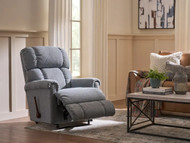
Wall Hugger Recliners: How Much Space You Really Need Behind Them
25th Mar 2026
“Wall hugger” recliners (also called wall away, wall saver, or close to wall recliners) are designed to recline while staying close to the wall. They do this by sliding the seat forward as the chair reclines, instead of pushing far backward like a traditional recliner.
That space saving design is real, but it is also easy to misunderstand. Wall huggers still need some clearance behind them, plus enough room in front for the footrest and enough space around them so the chair does not feel jammed into the room.
The quick answer
Most wall hugger recliners are designed to sit just a few inches from the wall. Many guides put the typical range around 4 to 6 inches behind the chair.
Some specific models are even more direct. For example, La-Z-Boy lists the Belmont Wall Recliner as able to be placed approximately 4 inches from a wall and still fully recline into the room.
Because mechanisms vary by model, your safest approach is: plan around the general range, then confirm using the product specs or a real-world test.
What “space behind” really means for a wall hugger
With a traditional recliner, you are mostly worried about the back hitting the wall.
With a wall hugger, you still need clearance behind the chair, but you are also managing:
-
The chair back and headrest as it tilts
-
Baseboards, window trim, outlets, and drapery panels
-
The chair moving forward into the room (which affects walkways)
A practical rule from Living Spaces is that when fully reclined, the recliner’s headrest and footrest should be no closer than about 5 inches from the wall or surrounding furniture.
A realistic planning range that works in most rooms
Use this as a starting point:
-
4 inches: possible for some wall recliners (example: La-Z-Boy Belmont).
-
4 to 6 inches: common guidance for many wall hugger styles.
-
6 inches: a safe target if you want extra margin for baseboards, trim, and slight variations.
If the chair is also a rocker, swivel, or glider, assume you may need more side clearance because of movement.
The part most people miss: front space matters more than back space
Wall hugger recliners save space behind, but they take space in front because the seat slides forward into the room when reclining.
So the real question is not only “How close can it be to the wall?” It is also “Will it block traffic when it reclines?”
A simple check that prevents mistakes
Look up the recliner’s fully extended measurement (front to back when reclined). Many product pages list this. For example, a La-Z-Boy power wall recliner listing shows a “Fully Extended” length of 64 inches for that model.
Then compare that to your room and make sure the extended chair does not cut across a main walkway.
How to measure at home in 5 minutes
-
Put painter’s tape on the floor to mark where the back of the chair will sit.
-
Start with 6 inches off the wall, then test a tighter position if needed.
-
Recline the chair fully and check behind the headrest area and behind the top of the back for contact risk.
-
Check the footrest extension against your coffee table and your main walkway.
-
Add a little extra margin for baseboards, drapes, or outlet covers.
If you are buying power, also plan cord slack so the chair can recline without tugging the cord.
Power wall hugger recliners: outlet planning and cord safety
Power motion adds two practical considerations:
-
Many manufacturer instructions specify plugging the power cord directly into a wall outlet and keeping enough slack for reclining movement.
-
Many power wall recliners are explicitly intended to be placed “inches from a wall,” but the exact inches vary by model, so confirm on the specific product details or manual.
If the only outlet option forces a cord across a walkway, that usually means the chair location should change or you should plan a better outlet solution.