
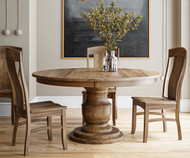
Round vs Rectangle Dining Tables: Which Shape Works Best for Your Space
27th Feb 2026
If you are choosing a dining table, shape is not just style. It decides how many people fit, how easily chairs pull out, and whether the room feels open or cramped. The right pick usually comes down to three things: your room shape, your seating goals, and your traffic flow.
Below is a practical way to decide, plus size and spacing guidelines you can use before you buy.
Step 1: Measure your room the way you actually use it
A table that technically fits can still be annoying if people have to scoot sideways to get to a chair.
Clearance rule to remember
-
Plan at least 36 inches from the table edge to a wall or furniture for basic movement. Many designers prefer 42 to 44 inches when possible, especially in busy walkways.
Chair pull back zone
-
Expect chairs to need about 24 to 30 inches behind them to pull out and sit comfortably.
Quick test
Use painter’s tape to outline the table size on the floor, then place a chair where it would go. If you cannot pull the chair out without bumping into something, adjust size or shape.
When a round dining table works best
Round tables are often the easiest solution for square rooms, breakfast nooks, and tighter spaces because there are no corners interrupting movement. They also tend to feel more social since everyone is at a similar distance.
Choose round if you want:
-
Better traffic flow in compact or awkward layouts
-
A more conversation-friendly feel (no “ends” of the table)
-
Fewer sharp corners, which can matter in narrow paths
What to watch for with round tables
-
To seat more people, the diameter grows quickly. A large round table can take up more usable floor space than you expect.
-
The base matters. A pedestal base often makes seating more flexible than legs at the corners.
Common round table sizes (helpful starting points)
-
36 to 44 inches diameter: often seats 4
-
44 to 54 inches diameter: often seats 4 to 6
-
54 inches and up: often seats 6 to 8
When a rectangular dining table works best
Rectangular tables are the most common choice because they are efficient in long rooms and they scale well for larger groups.
Choose rectangular if you want:
-
Maximum seating for family dinners and holidays
-
A good fit for long or narrow rooms
-
Easier expansion options (leaves are very common in this shape)
What to watch for with rectangular tables
-
Corners can pinch traffic flow in tight rooms.
-
Conversation can feel more “two groups” if the table is long, especially when people are spread out.
Common rectangular table sizes
A good rule of thumb is about 24 inches of width per person for comfortable elbow room.
Typical guidance looks like this:
-
About 36 to 40 inches wide for many rectangular tables
-
48 inches long seats 4
-
60 to 72 inches long seats 4 to 6
-
78 inches or longer seats 6 to 8
The deciding factors most people miss
1) Room shape matters more than room size
-
Square room: round often feels calmer and easier to walk around
-
Long room: rectangular usually uses the footprint better
2) Everyday seating versus “once a month” seating
If you host big gatherings a few times a year, an extendable rectangular table can be the most practical solution. If daily life is a smaller group, a round table can feel better day to day, even if it seats fewer in a pinch.
3) Traffic flow in open concept rooms
In open layouts where you are constantly walking past the dining area, round tables are often easier to live with because corners do not interrupt the path.
Quick recommendations by scenario
-
Small square dining area or nook: round table, pedestal base if possible
-
Long dining room or open dining area: rectangular table, consider an extension leaf
-
You host often: rectangular is usually the easiest way to add seats
-
You care most about conversation: round keeps everyone closer and more evenly spaced