
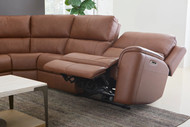
Manual vs Power Recliners: Features, Benefits, and How to Choose the Right Reclining Options
23rd Feb 2026
Reclining furniture has changed a lot in the last decade. You can still buy a simple lever recliner that does one job well, but you can also choose power motion with independent controls, built-in charging, and comfort adjustments that fine tune how the chair supports your head, back, and legs. The best choice comes down to how you use the room, who uses the chair, and what features you will actually use every day.
This guide breaks down manual vs power reclining, then goes deeper on the power features people ask for most, including adjustable headrests, lumbar, USB charging, and zero gravity reclining. It also highlights examples of manufacturer-specific features, like La-Z-Boy wireless remotes and independent back and legrest control.
Reclining options at a glance
When most people say “recliner,” they mean a single chair, but reclining comfort shows up in a few common formats:
-
Traditional recliners (manual or power)
-
Wall recliners designed for placing closer to the wall in tighter rooms
-
Rocking and gliding recliners (motion plus recline, depending on model category)
-
Reclining sofas and loveseats for shared seating
-
Power lift recliners that assist with standing and sitting (a different category, but often considered when mobility is a factor)
Manual reclining: why people still love it
Manual recliners use a lever or push-back mechanism. They tend to be straightforward: fewer electronics, fewer feature decisions, and no need to plan for an outlet.
Manual recliner advantages
-
Simple and familiar operation
-
More flexible placement because no power source is required
-
Typically lower cost than comparable power versions
Manual recliner tradeoffs
-
Less precision in finding “the perfect angle” compared with powered position control
-
Fewer available comfort features like powered headrest, lumbar, or memory settings
-
Can be harder to operate for some people, depending on strength and mobility
Manual is often a great fit when you want comfort, you do not need extra adjustability, and you prefer a simpler chair you can place anywhere.
Power reclining: what you gain (and what to plan for)
Power recliners use an electric motor and a button control panel or remote to recline smoothly. Many people choose power because it is easier to use and easier to fine tune for comfort.
Power recliner advantages
-
Smooth motion and more precise positioning versus manual
-
Access to popular features like power headrest, power lumbar, USB charging, memory presets, and home buttons
-
Often a better fit when someone in the household wants easy, low-effort reclining
Power recliner tradeoffs
-
Requires power planning. Many power models need to plug into an outlet.
-
Manufacturers commonly warn not to use extension cords, adapters, or surge protectors for certain power recline systems. Always follow the manual for the specific product.
A helpful workaround: battery packs
If an outlet location is the only thing holding you back from power, some systems support battery packs so you can reduce visible cords and place the chair more freely.
Power features people ask for most (and who they are best for)
1) Independent back and legrest control
This is one of the biggest upgrades in day-to-day comfort. Instead of the chair moving as one linked motion, you can adjust the back and the legrest separately.
-
La-Z-Boy lists models with independent back and legrest motion so you can find more combinations of support.
Best for: people who want legs up while staying more upright, or people who want to recline without forcing the footrest to match one preset angle.
2) Power headrest
A powered headrest helps when you are reclined but still want your head and neck supported for TV or reading.
-
Many power recliners are offered with power headrest options, including models from La-Z-Boy, Flexsteel, Smith Brothers and Southern Motion.
Best for: TV watching, taller users, and anyone who dislikes the “reclined but looking at the ceiling” feeling.
3) Power lumbar support
Lumbar adjustment lets you change the feel of lower back support without changing cushions.
Best for: people with picky back comfort preferences, and anyone who alternates between lounging and upright sitting.
4) USB charging ports
USB ports are simple, but they become a daily convenience fast.
Best for: anyone who uses a phone or tablet while seated, and households trying to reduce charger clutter.
5) Memory settings and “home” button
These features save your favorite position and return the chair to upright easily.
-
La-Z-Boy lists memory options and a home button on some models.
-
Flexsteel describes a home button that returns headrest, footrest, and lumbar to original positions with one touch on certain power controls.
Best for: multi-user households and anyone who wants “one touch, done.”
6) Zero gravity reclining
Zero gravity is usually described as a position intended to reduce pressure and create a more “weightless” feel. They have a wider range of motion and elevate the feet and legs higher.
Best for: people who prioritize full-body relaxation and pressure relief style positioning.
Manufacturer-specific examples customers ask about
La-Z-Boy: wireless remotes and independent motion
-
One of La-Z-Boys most popular features in their power recliners is their wireless remote. This remote gives you full control over the chair operations, gives access to your own presets. The remote has a 'find my remote' button, which makes keeping track of it easy.
-
Many La-Z-Boy recliners have independently moving back and feet, giving you more control over comfort in La-Z-Boy recliners.
Practical takeaway: if independent control matters to you, ask specifically for that feature. Not every power recliner is built the same, even within the same brand.
Flexsteel: independent adjustments, USB, and zero gravity on select models
-
Flexsteel describes power controls that can independently adjust headrest, recline, and lumbar, and includes a USB port and a home button on certain models.
-
Flexsteel also uses zero gravity terminology on some power recliners.
Manual vs power: how to decide quickly
Choose manual if:
-
You want simpler operation and fewer parts
-
You do not want to plan around an outlet
-
You want reclining comfort at a lower price point
Choose power if:
-
Ease of use matters (no pushing, no levers)
-
You want features like headrest, lumbar, USB, memory, or independent controls
-
You like dialing in the exact angle instead of “close enough”
Planning tips so your recliner fits and functions
-
Check wall clearance requirements for the specific recliner. Some models list close-to-wall placement requirements (example: a model listing 11 inches from a wall).
-
Confirm the power requirements and follow the manufacturer guidance about plugging directly into a wall outlet and avoiding extension cords where specified.
-
If you want power without a visible cord, ask about battery pack compatibility.