

Amish Dining Tables and Wood Species 101: How to Choose the Right Wood for Your Style and Everyday Life
3rd Feb 2026
When you shop Amish dining furniture, you are not just choosing a table shape and size. You are choosing a wood species that will define the look, feel, and character of your dining room for decades. Grain pattern, color, natural variation, and hardness all play a role in how your table will age and how it fits your home.
Below is a practical guide to the most common Amish hardwoods used in dining table construction, including what each wood looks like, what styles it complements, and what to expect in real life.
Start here: What matters most when picking a wood?
1) The aesthetic
Wood species is the foundation of your table’s personality.
-
Some woods are consistent and quiet.
-
Others are bold and dramatic with strong grain and color contrast.
-
Some change noticeably over time, developing a richer patina.
2) Natural variation
Many Amish options come in both clear and rustic grades.
-
Clear grades typically look cleaner and more uniform.
-
Rustic grades can include mineral streaks, color variation, and knots that add character.
Your preference here is less about quality and more about the look you want.
3) Durability and dent resistance
Hardness is not the only factor in durability, but it is a useful reference point. In general, higher hardness means better resistance to dents from everyday use.
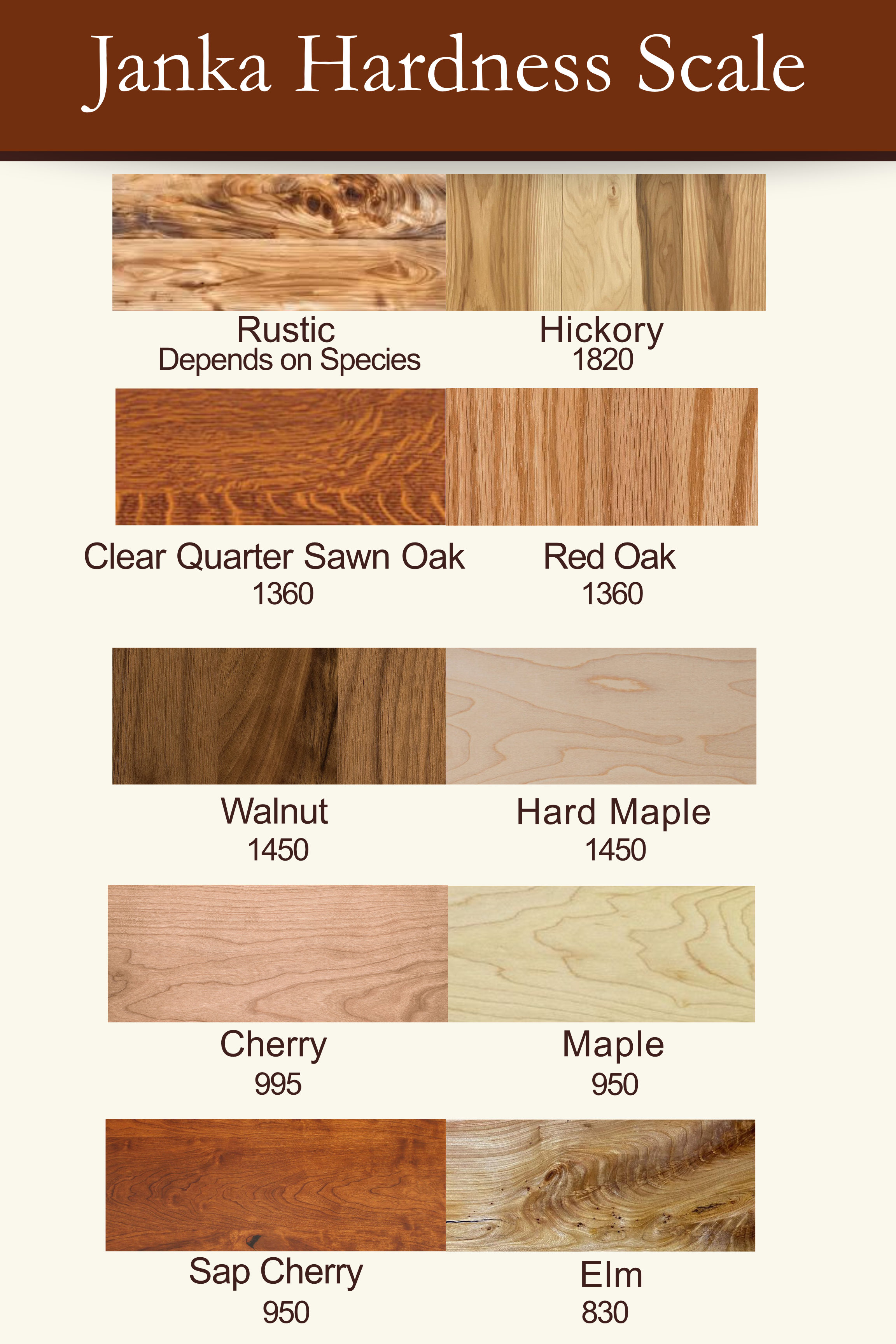
Quarter sawn oak: The classic for Craftsman and Mission style
If you love clean lines and timeless design, quarter sawn oak is hard to beat. Quarter sawing reveals the famous ray fleck pattern, sometimes called flake, which gives the surface depth and shimmer. It is one reason Craftsman and Mission furniture has such a distinctive look.
-
Look: Straight grain with ray fleck highlights
-
Best styles: Mission, Craftsman, transitional
-
Design pairings: Black hardware, trestle bases, slat back chairs
-
Durability note: Hard and dependable for daily dining use
Red oak: Pronounced grain and traditional warmth
Red oak is recognizable for its stronger cathedral grain patterns. It reads traditional and welcoming, and it can also work in modern spaces when paired with simpler silhouettes and clean edges.
-
Look: Noticeable grain with warm undertones
-
Best styles: Traditional, farmhouse, transitional
-
Design pairings: Turned legs, classic chair profiles, medium warm stains
-
Durability note: Strong everyday performance with a familiar grain
Hard maple and brown maple: Cleaner grain, more contemporary flexibility
Maple is a favorite for customers who want a smoother, less grainy look. It is especially popular in contemporary and transitional dining rooms because it does not visually dominate the space.
-
Hard maple look: Light, clean, and uniform
-
Brown maple look: Warmer tone, slightly more variation, still relatively smooth
-
Best styles: Contemporary, Shaker, Scandinavian-inspired, transitional
-
Design pairings: Tapered legs, clean trestles, lighter stains and natural finishes
-
Durability note: Hard maple is especially resistant to dents and wear
Cherry and sap cherry: The wood that gets richer with time
Cherry is famous for aging beautifully. Over time, exposure to light and air deepens cherry’s color from lighter tones into a richer, warmer reddish-brown. Sap cherry includes more light sapwood, which creates more contrast and variation across the boards.
-
Cherry look: Warm, refined, classic
-
Sap cherry look: More light-to-dark variation, more character
-
Best styles: Traditional, transitional, formal dining rooms
-
Design pairings: Elegant profiles, shaped edges, statement lighting
-
Durability note: A classic heirloom choice that looks better over time
Walnut: Rich color and modern sophistication
Walnut is a statement wood. Its naturally deeper tone looks high-end with minimal effort. In modern spaces, walnut feels clean and architectural. In traditional homes, it feels warm and classic.
-
Look: Medium to dark brown with natural color variation
-
Best styles: Contemporary, mid-century inspired, transitional
-
Design pairings: Clean bases, simple chair silhouettes, matte black accents
-
Durability note: Excellent everyday durability with a rich, upscale look
Hickory: Bold grain and heavy-duty everyday performance
Hickory is the choice for customers who want visible character and strength. It often shows dramatic color variation, which is why it pairs so well with rustic, lodge, and modern farmhouse interiors.
-
Look: High contrast, bold grain, naturally rustic
-
Best styles: Rustic, modern farmhouse, lodge
-
Design pairings: Thick tops, plank styles, trestle bases, bench seating
-
Durability note: One of the most dent-resistant options, great for busy homes
Elm: Understated character with a distinctive grain
Elm is a great option if you want something less common. It has a unique grain character and tends to have an organic look that works well in transitional or modern spaces.
-
Look: Distinct grain with movement and character
-
Best styles: Organic modern, transitional, eclectic
-
Design pairings: Natural finishes, simpler shapes, mixed materials
-
Durability note: Better for customers who prioritize look and character over maximum hardness
A quick cheat sheet: Which wood fits which style?
-
Mission and Craftsman: Quarter sawn oak
-
Modern farmhouse: Hickory, red oak
-
Clean and contemporary: Maple or hard maple
-
Traditional and formal: Cherry
-
Mid-century or modern luxury: Walnut
-
Organic modern or something different: Elm
What to do next in the showroom
Wood choice is easiest when you can compare boards side by side under real light.
-
Start with the look you love first.
-
Then confirm how much natural variation you want (clear vs rustic).
-
Finally, pick the finish that complements your floors, lighting, and adjacent wood tones.
If you bring a few photos of your space, we can help narrow your wood choice quickly and build a dining set that feels intentional, not accidental.